
Carbonexit helps investors, industrial teams and specialist consulting firms assess technologies, companies, projects and value chains under real-world market, industrial, supply chain and policy constraints.

Intelligence Brief
Published • Focused • Rapid
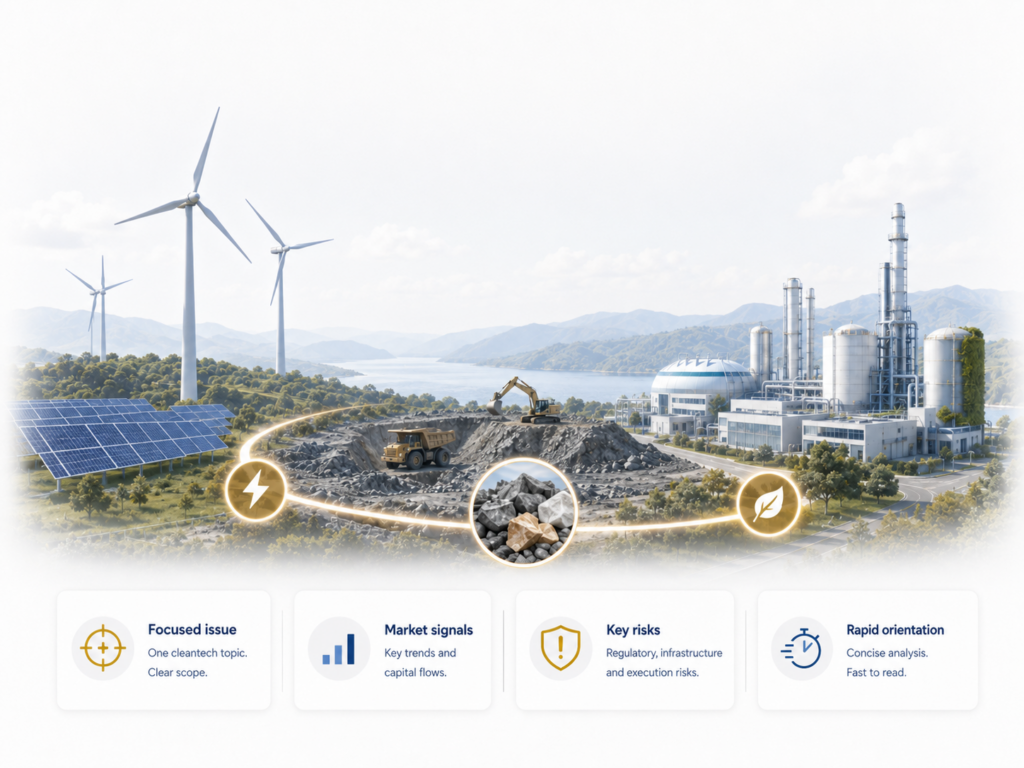
A focused view on a critical market or industrial decarbonisation issue
A standardised, evidence-based report on a technology, competitive landscape, value chain, or emerging industrial risk. Intelligence Briefs help decision-makers understand what is changing, why it matters, and which companies, dependencies, or assumptions deserve closer attention.
Format
Published by Carbonexit and made available to multiple clients at a fixed price. Optional private briefing sessions may be offered separately.
Best suited for
• Rapid market orientation
• Emerging technology or policy signals
• Competitive and value chain monitoring
• Internal briefings and strategic discussions
What you receive
A concise report combining recent evidence, named companies, key risks and practical implications.
Strategic Intelligence Review
Commissioned • Decision-specific
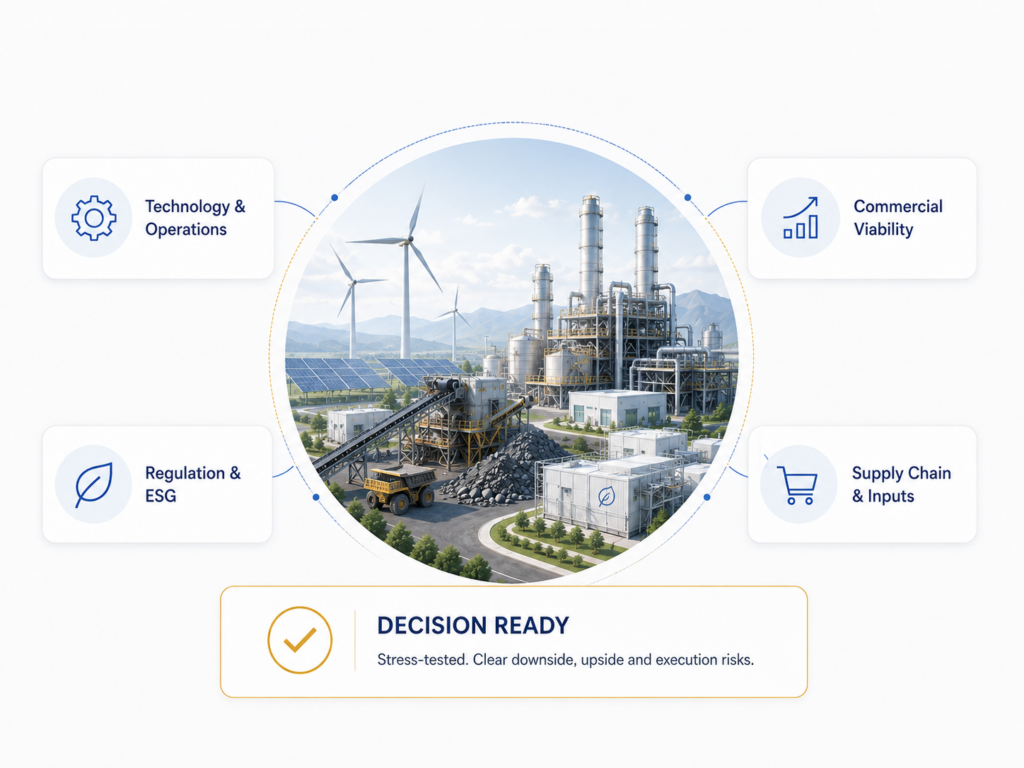
Independent assessment for a critical investment or strategic decision
A commissioned assessment of a company, technology, project, or value chain. We test the available evidence, distinguish verified facts from company claims, challenge key industrial and commercial assumptions, and identify risks that require deeper investigation.
Format
A tailored but tightly scoped engagement built around one defined investment or strategic question. The scope, timetable and fixed fee are confirmed after an initial discussion.
Best suited for
• Investment thesis stress testing
• Technology and competitor assessment
• Market entry or partnership decisions
• Industrial bottleneck and supply chain analysis
What you receive
A structured decision deck or memo, an executive summary, peer benchmarking, evidence gaps and a findings review call.
Bespoke Advisory
Custom • Integrated • Flexible
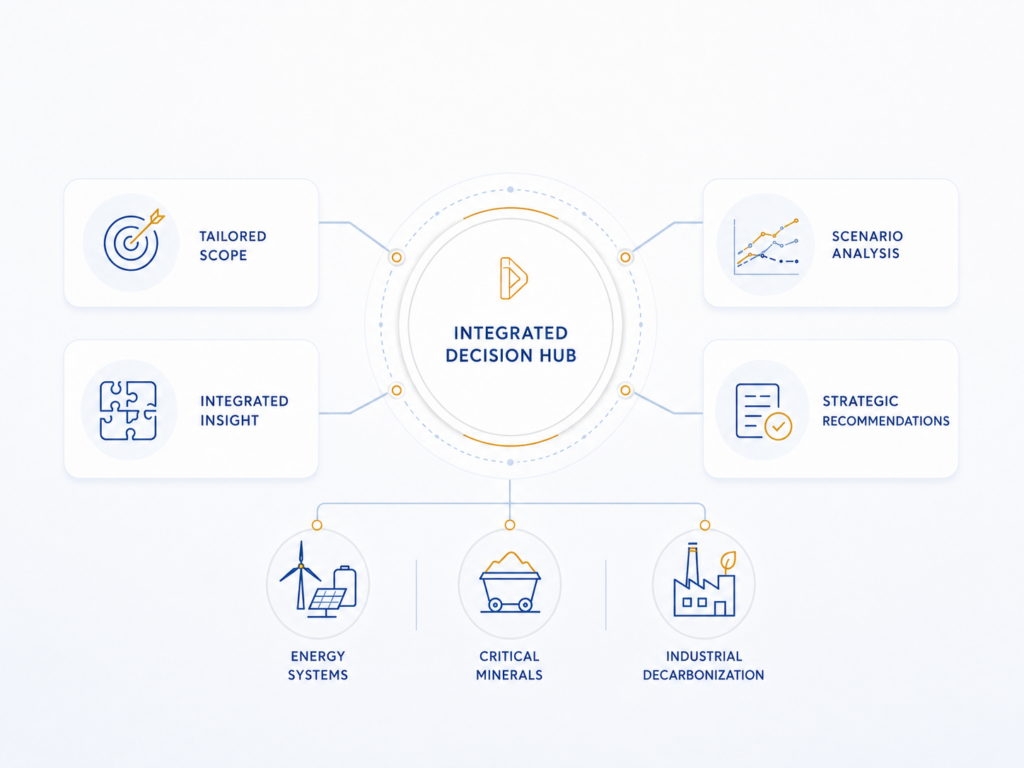
Tailored advisory for complex strategic questions and client decisions
A tailored engagement for questions spanning technologies, markets, value chains, or jurisdictions. We combine market intelligence, technology assessment, industrial analysis, and strategic support to address the client’s specific needs and inform core decisions.
Format
A fully customised engagement with a dedicated scope, methodology, timetable and deliverables agreed during the scoping call.
Best suited for
• Multi-market or multi-technology studies
• Detailed competitive intelligence
• Investment and project assessment
• Ongoing strategic or specialist support
What you receive
A customised analytical programme and deliverables designed around the client’s strategic question and decision process.
Decarbonisation Market & Investment Screen

Test whether the opportunity makes commercial and strategic sense
Assesses whether a technology, company, project or value chain is supported by real demand, credible economics and a defensible competitive position, rather than policy momentum or market hype.
Key questions
• Is there a genuine customer need?
• Is demand driven by economics, regulation or industrial necessity?
• Are the revenue model, pricing and adoption pathway credible?
• Is the opportunity investable, strategically relevant or too early?
Decision Contribution
A concise assessment of market logic, competitive position, evidence quality, key red flags and decision implications.
Technology & Industrialisation Screen
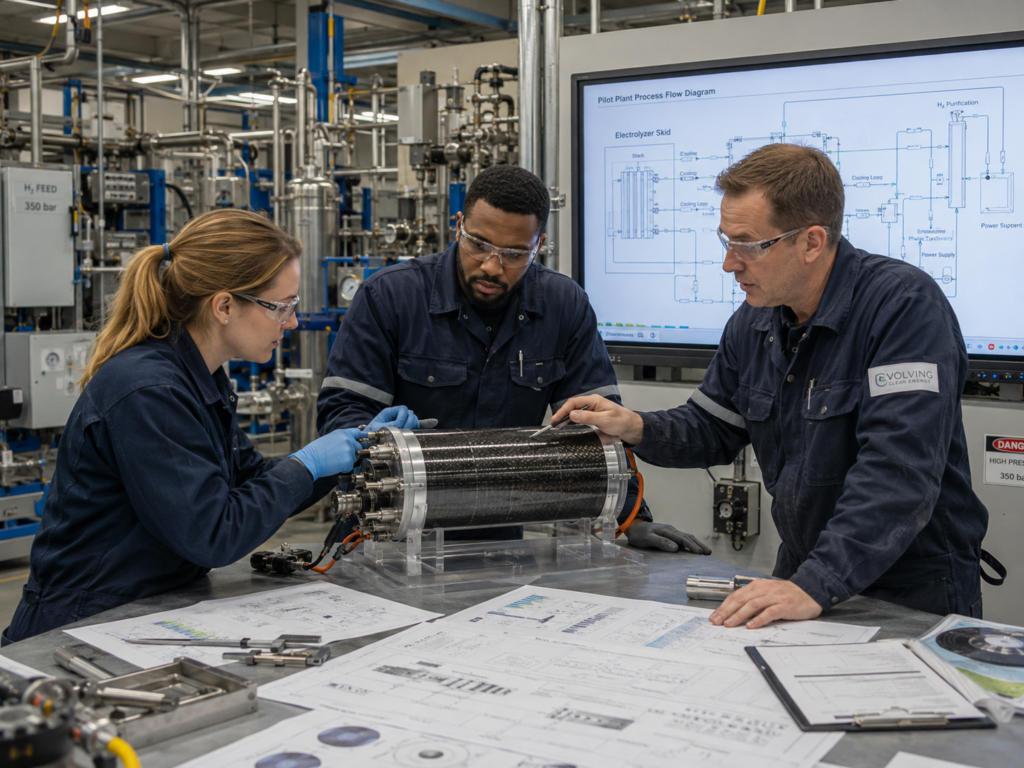
Assess whether the technology can scale beyond the pilot stage
Tests whether a technology, company or project is technically credible, industrially realistic and capable of operating reliably under real-world conditions, rather than remaining dependent on pilot-scale evidence.
Key questions
• What evidence exists beyond pilots and announcements?
• Can the process, equipment, or system scale reliably?
• Are manufacturing, integration, and qualification assumptions credible?
• Which technical or operational constraints are underestimated?
Decision Contribution
A concise assessment of technology evidence, industrialisation risks, scale-up constraints, infrastructure needs, key red flags and decision implications.
Supply Chain, Infrastructure & Policy Screen

Identify external dependencies that could weaken the thesis
Assesses whether materials, suppliers, processing capacity, infrastructure, regulation and geopolitical exposure could constrain deployment or undermine an investment or strategic decision, rather than remaining hidden outside the company’s direct control.
Key questions
• Which critical inputs and suppliers are concentrated?
• What infrastructure or permitting constraints matter most?
• Which policy changes will affect deployment in practice?
• Should the client secure, diversify, redesign, partner, monitor or avoid?
Decision Contribution
A concise assessment of dependencies, bottlenecks, policy exposure, geopolitical risks, mitigation options and decision implications.